Hosted by TruLight Ministries International – The Place of Truth
SELECT YOUR READING LANGUAGE – BOTTOM LEFT = YOUR DAILY MANNA NOW AVAILABLE IN 103 LANGUAGES
@ TruLight Daily Manna is not Just a Bible Verse with a Small Prayer . NO ::: WE SERVE DAILY Manna for the ENTIRE Day . Breakfast , Lunch , Dinner , Plus tea Times and even Entertainment Manna . Plus News Manna and More , This Daily Manna will keep you Spiritually full for the full 48 Hours and even More to Share with your Friends and Family !!!
7 Psalms for when your Mind are Under Attack !!! PSALM 94
The Lord Will Not Forsake His People
Psa 94:1 O LORD God, to whom vengeance belongeth; O God, to whom vengeance belongeth, shew thyself.
Psa 94:2 Lift up thyself, thou judge of the earth: render a reward to the proud.
Psa 94:3 LORD, how long shall the wicked, how long shall the wicked triumph?
Psa 94:4 How long shall they utter and speak hard things? and all the workers of iniquity boast themselves?
Psa 94:5 They break in pieces thy people, O LORD, and afflict thine heritage.
Psa 94:6 They slay the widow and the stranger, and murder the fatherless.
Psa 94:7 Yet they say, The LORD shall not see, neither shall the God of Jacob regard it.
Psa 94:8 Understand, ye brutish among the people: and ye fools, when will ye be wise?
Psa 94:9 He that planted the ear, shall he not hear? he that formed the eye, shall he not see?
Psa 94:10 He that chastiseth the heathen, shall not he correct? he that teacheth man knowledge, shall not he know?
Psa 94:11 The LORD knoweth the thoughts of man, that they are vanity.
Psa 94:12 Blessed is the man whom thou chastenest, O LORD, and teachest him out of thy law;
Psa 94:13 That thou mayest give him rest from the days of adversity, until the pit be digged for the wicked.
Psa 94:14 For the LORD will not cast off his people, neither will he forsake his inheritance.
Psa 94:15 But judgment shall return unto righteousness: and all the upright in heart shall follow it.
Psa 94:16 Who will rise up for me against the evildoers? or who will stand up for me against the workers of iniquity?
Psa 94:17 Unless the LORD had been my help, my soul had almost dwelt in silence.
Psa 94:18 When I said, My foot slippeth; thy mercy, O LORD, held me up.
Psa 94:19 In the multitude of my thoughts within me thy comforts delight my soul.
Psa 94:20 Shall the throne of iniquity have fellowship with thee, which frameth mischief by a law?
Psa 94:21 They gather themselves together against the soul of the righteous, and condemn the innocent blood.
Psa 94:22 But the LORD is my defence; and my God is the rock of my refuge.
Psa 94:23 And he shall bring upon them their own iniquity, and shall cut them off in their own wickedness; yea, the LORD our God shall cut them off.
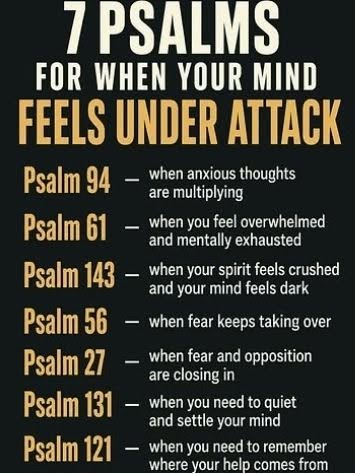
We overthink when we put too much time into thinking about or analyzing something in a way that is more harmful than helpful. We are overthinking when thoughts about problems, relational issues, and even plans dominate our waking hours. Everyone overthinks occasionally. When we are excited, afraid, worried, or elated, we tend to ruminate on conversations or actions we either participated in or wish we had. We may have seasons of overthinking when we are engaged in a major project, such as building a house or starting a company. The plethora of details that must be addressed consumes our thoughts for a time. Thinking is good, but overthinking can turn a simple matter into an overly complex one.
Certain emotions, such as dread, lead us to overthink more than others do. When an event looms on the horizon that promises to be painful or otherwise unpleasant, we tend to overthink it. Pregnant women sometimes overthink the upcoming labor and delivery experience. They mentally live through the anticipated agony and possible tragic outcomes as a way of “preparing” themselves for it. We can also overthink past events or conflicts, rehashing every syllable or action taken in an effort to process it. Of course, such overthinking does no good; what’s done is done. Introverts are more prone to overthinking than extroverts due to their natural tendency to live inside their own heads.
Our minds are always going. Many of us carry on running conversations inside our heads all day long. Thoughts about one situation overlap thoughts about another, and we return over and over again to the ones that elicit strong emotion. A few people, by design, can successfully compartmentalize their thoughts so that they do not overthink. But most of us will engage in overthinking at times. This is normal, but when it becomes a lifestyle of worry or anxiety, we need to change something.
One way to avoid overthinking a subject is to incorporate Scripture and prayer into one’s thoughts. The psalmists give us excellent examples of this. Psalm 94:19 says, “When my anxious thoughts multiply within me, Your consolations delight my soul.” Many of the psalms were written by overthinkers who were facing danger, emotional unrest, fear, or despair. They boldly wrote out their anxious thoughts and then turned them into the worship of God. Psalm 6 is one such prayer. Verse 6 describes the condition of many who overthink: “I am worn out from my groaning. All night long I flood my bed with weeping and drench my couch with tears.” Yet the author, David, does not stop there. The psalm ends with these words: “The Lord has heard my cry for mercy; the Lord accepts my prayer. All my enemies will be overwhelmed with shame and anguish; they will turn back and suddenly be put to shame” (verses 9–10).
Satan capitalizes on our inclination to overthink by creating doubts and fears about spiritual things. Some Christians who overthink have difficulty resting in their salvation because they over-analyze their grace-based relationship with God rather than resting in “the simplicity that is in Christ” (2 Corinthians 11:3, KJV). They fear that, if they haven’t thought of everything, God might reject them. This is unhealthy and an example of the fiery darts warned about in Ephesians 6:16. Spiritual overthinkers may scrutinize and dissect a Scripture passage until they convince themselves that they have found a new meaning, one that neither the apostles nor Christian leaders of the past have discovered. Cults and false religions have been founded by overthinking.
Overthinking can be transformed into a positive activity such as healthy meditation, prayer, or Scripture memorization. It is helpful to research specific verses that address overthinking and have them ready when the obsessive thoughts start. Quoting them aloud, purposefully transferring the issue to God, and telling ourselves, “No, I’m going to change my thoughts now,” are all ways we can resist the impulse to overthink. Giving our minds a constructive project also helps keep them away from harmful, obsessive thoughts. Many who struggle with overthinking have poured their energies into creative endeavors such as writing, music, and art and thereby bring beauty from otherwise damaging thinking patterns. Prayer, meditation, and productive outlets for expression can all help relieve the pressure that leads to overthinking.
The Bible has a great deal to say about revenge. Both the Hebrew and Greek words translated “vengeance,” “revenge,” and “avenge” have as their root meaning the idea of punishment. This is crucial in understanding why God reserves for Himself the right to avenge.
The key verse regarding this truth is found in the Old Testament and quoted twice in the New Testament. God said, “It is mine to avenge; I will repay. In due time their foot will slip; their day of disaster is near and their doom rushes upon them” (Deuteronomy 32:35; Romans 12:19; Hebrews 10:30). In Deuteronomy, God is speaking of the stiff-necked, rebellious, idolatrous Israelites who rejected Him and incurred His wrath with their wickedness. He promised to avenge Himself upon them in His own timing and according to His own perfect and pure motives. The two New Testament passages concern the behavior of the Christian, who is not to usurp God’s authority. Rather, we are to allow Him to judge rightly and pour out His divine retribution against His enemies as He sees fit.
Unlike us, God never takes vengeance from impure motives. His vengeance is for the purpose of punishing those who have offended and rejected Him. We can, however, pray for God to avenge Himself in perfection and holiness against His enemies and to avenge those who are oppressed by evil. In Psalm 94:1, the psalmist prays for God to avenge the righteous, not out of a sense of uncontrolled vindictiveness, but out of just retribution from the eternal Judge whose judgments are perfect. Even when the innocent suffer and the wicked appear to prosper, it is for God alone to punish. “The LORD is a jealous and avenging God; the LORD takes vengeance and is filled with wrath. The LORD takes vengeance on his foes and maintains his wrath against his enemies” (Nahum 1:2).
There are only two times in the Bible when God gives men permission to avenge in His name. First, after the Midianites committed hideous, violent acts against the Israelites, the cup of God’s wrath against the Midianites was full, and He commanded Moses to lead the people in a holy war against them. “The LORD said to Moses, ‘Take vengeance on the Midianites for the Israelites. After that, you will be gathered to your people’” (Numbers 31:1-2). Here, again, Moses did not act on his own; he was merely an instrument to carry out God’s perfect plan under His guidance and instruction. Second, Christians are to be in submission to the rulers God has set over us because they are His instruments for “vengeance on evildoers” (1 Peter 2:13-14). As in Moses’ case, these rulers are not to act on their own, but are to carry out God’s will for the punishment of the wicked.
It is tempting to try to take on the role of God and seek to punish those who we feel deserve it. But because we are sinful creatures, it is impossible for us to take revenge with pure motives. This is why the Mosaic Law contains the command “Do not seek revenge or bear a grudge against one of your people, but love your neighbor as yourself. I am the LORD” (Leviticus. 19:18). Even David, a “man after God’s own heart” (1 Samuel 13:14), refused to take revenge on Saul, even though David was the innocent party being wronged. David submitted to God’s command to forego vengeance and trust in Him: “May the LORD judge between you and me. And may the LORD avenge the wrongs you have done to me, but my hand will not touch you (1 Samuel 24:12).
As Christians, we are to follow the Lord Jesus’ command to “love your enemies and pray for those who persecute you” (Matthew 5:44), leaving the vengeance to God.
The Lord’s discipline is an oft-ignored fact of life for believers. The Bible teaches that, as our loving Heavenly Father, God disciplines us. His discipline is not doubtful; it is assured:
“My son, do not make light of the Lord’s discipline,
and do not lose heart when he rebukes you,
because the Lord disciplines the one he loves,
and he chastens everyone he accepts as his son” (Hebrews 12:5–6, quoting Proverbs 3:11–12).
God’s “discipline” (“chastisement” in the NKJV) and “rebuke” come to “everyone.” His correction is, in fact, a sign of His love for His children, and we are to “not lose heart” when we experience it.
Human fathers have a responsibility to train their children (see Ephesians 6:4), and part of that training is to administer discipline. Just as human fathers wisely discipline their children, so does God: “Endure hardship as discipline; God is treating you as his children. For what children are not disciplined by their father? If you are not disciplined—and everyone undergoes discipline—then you are not legitimate, not true sons and daughters at all” (Hebrews 12:7–8). As we undergo God’s discipline, we can rejoice in at least one fact: God is treating us as true children of His (see Deuteronomy 8:5)!
Discipline is not the same as condemnation. God disciplines His children, but He does not condemn them. Romans 8:1 makes this clear: “There is now no condemnation for those who are in Christ Jesus” (cf. Romans 8:33–34). Discipline has to do with training and growth; condemnation has to do with punishment and guilt.
When does God discipline us? Discipline is training, and that training involves both positive and negative aspects. Part of discipline is simply guiding someone to follow certain rules or to observe certain behaviors. Another part of discipline involves reproof to correct disobedience. Both aspects of discipline can be tough. The trials Job endured were not a punishment for sin (see Job 1:8), but they were training in righteousness (see Job 42:3, 6), and Job emerged from his trial a better man.
God’s discipline begins when we are born again into His family. We immediately begin to learn and understand the Word of God and adjust our lives accordingly. This is a blessing in our lives:
“Blessed is the one you discipline, Lord,
the one you teach from your law;
you grant them relief from days of trouble” (Psalm 94:12–13).
This type of discipline is more preventative than corrective. Troubled days are coming, and the Lord would spare us.
God’s discipline also comes when we sin. In such cases, the chastisement is meant to be corrective. David, in one of his penitential psalms, expresses his desire that God moderate the severity of the punishment:
“Lord, do not rebuke me in your anger
or discipline me in your wrath.
Your arrows have pierced me, and your hand has come down on me.
Because of your wrath there is no health in my body;
there is no soundness in my bones because of my sin.
My guilt has overwhelmed me
like a burden too heavy to bear” (Psalm 38:1–4).
In this psalm, David admits his guilt and thus acknowledges that God’s punishment is just; at the same time, the sharp and crushing nature of the discipline seems more than he can bear, and he asks for help.
Charles Spurgeon’s note on Psalm 38 includes a paraphrase of David’s appeal: “Rebuked I must be, for I am an erring child and thou a careful Father, but throw not too much anger into the tones of thy voice; deal gently although I have sinned grievously. The anger of others I can bear, but not thine. . . . Chasten me if thou wilt, it is a Father’s prerogative, and to endure it obediently is a child’s duty; but, O turn not the rod into a sword, smite not so as to kill. True, my sins might well inflame thee, but let thy mercy and long-suffering quench the glowing coals of thy wrath. O let me not be treated as an enemy or dealt with as a rebel. Bring to remembrance thy covenant, thy fatherhood, and my feebleness, and spare thy servant” (Treasury of David, Volume II, Funk & Wagnalls, 1885, p. 220).
How does God discipline us? God can and does use various methods of discipline. He may use trouble at work, hardship at home, or travail in the ministry; Paul had many difficulties in life (2 Corinthians 11:23–29). God may allow us to experience loss, as David did (2 Samuel 12:13–18). God may send physical ailments or even death, as the church of Corinth learned (1 Corinthians 11:17–22, 30–32). Often, God will simply allow the natural consequences of our sin to run their course. We are forgiven, but we are corrected “so that we will not be finally condemned with the world” (1 Corinthians 11:32).
Why does God discipline us? He is a good Father who wants what’s best for His children. Humanly speaking, no child will reach his or her full potential without training and discipline. The virtuoso violinist would never have reached the concert hall without discipline. The record-setting athlete would never have excelled in any sport withoutdiscipline. Following that principle, here are some reasons that we experience God’s discipline:
- God disciplines His children because He loves them.
- God disciplines His children to make them more mature.
- God disciplines His children to increase their capacity for virtue.
- God disciplines His children to keep them on the right path.
- God disciplines His children to grow their faith.
- God disciplines His children to purify them from sin.
The result of God’s discipline is holiness and maturity: “Consider it pure joy, my brothers and sisters, whenever you face trials of many kinds, because you know that the testing of your faith produces perseverance. Let perseverance finish its work so that you may be mature and complete, not lacking anything” (James 1:2–4). The Lord continues to work with us, as a potter does the clay, and His discipline is for our good and His glory.
In Romans 12:19, the apostle writes, “Do not take revenge, my dear friends, but leave room for God’s wrath, for it is written: ‘It is mine to avenge; I will repay,’ says the Lord.” Here, Paul quotes Deuteronomy 32:35 to establish why believers should not take matters into their own hands. God is the ultimate judge. He sees every unjust act committed. Believers should trust in God’s perfect timing and judgment. He will avenge. He will repay. God’s perfect justice should instill confidence in His plan.
When God says, “I will repay,” He reminds believers of His sovereign justice. God is the supreme ruler. He does not allow the world to run amuck without accountability. He will address every sin and wrongdoing, if not in this life, then in the one to come. Knowing that justice will be served, God’s sovereignty should make us feel secure. We should not retaliate against others when we are wronged; instead, we should trust that God’s justice surpasses our own. Psalm 94:1–2 says, “The Lord is a God who avenges. O God who avenges, shine forth. Rise, Judge of the earth; pay back to the proud what they deserve.” The psalmist knows justice is in God’s hands. We must rest in that same knowledge.
I will repay does not encourage passive acceptance of wrongdoing, though. We must still call out and challenge wrongdoing when we experience it. However, we should never take personal revenge against others. That is God’s prerogative. When we try to dispense justice our own way, in our own time, we inevitably mess things up. Seeking true justice is about addressing the wrong righteously and fairly; seeking revenge is about inflicting harm or suffering on the wrongdoer.
Proverbs 20:22 says, “Do not say, ‘I’ll pay you back for this wrong!’ Wait for the Lord, and he will avenge you.” God’s justice is not delayed or ineffective. He operates on a different timeline than we do and knows how to handle every situation best. His plan considers factors we cannot begin to see. Because God sees the big picture, we must release the desire to exact revenge against people who wrong us. Our revenge is unrighteous and riddled with mistakes, but God judges righteously and perfectly.
God’s promise, “I will repay,” implies a restoration to those who have been wronged. God’s justice is more than “evening the score.” He also heals us when we are wronged. Isaiah 61:8 says, “For I, the Lord, love justice; I hate robbery and wrongdoing. In my faithfulness, I will reward my people and make an everlasting covenant with them.” God punishes the wrongdoing and blesses the sufferer. He will never forget to care for those who have been wronged.
Moreover, God’s commitment, “I will repay,” calls believers to a high standard of forgiveness. Jesus exemplified a forgiving attitude when He said, “Father, forgive them, for they do not know what they are doing” (Luke 23:34). Jesus teaches us to have the same attitude in Matthew 5:44: “I tell you, love your enemies and pray for those who persecute you.” When we trust in God’s promise to repay, Jesus’ teaching to forgive and pray for our enemies is possible. Knowing God has the matter well in hand, we can move forward with peace, love, and joy. We do not need to carry the burden of revenge.
God’s assurance, “I will repay,” reminds us of our need for God’s grace and mercy. There are situations that cause us to yearn for God to exact justice, but we must also remember God’s grace and mercy. We have received of His goodness, and we should seek to extend that goodness to others. “Be kind and compassionate to one another, forgiving each other, just as in Christ God forgave you” (Ephesians 4:32). As we have been forgiven, we must forgive. If any “repayment” is needed, God will see to it.

Tea Time Manna
“Neither this man nor his parents sinned,” said Jesus, “but this happened so that the work of God might be displayed in his life.”
—John 9:3
Let’s ask God to help us view people through the eyes of Jesus so that we will see them as someone in whom the work of God needs to be displayed. When Jesus and his followers approached a man who was blind from birth, the disciples assumed that this misfortune had happened because someone had sinned. Jesus saw their labeling of the man as dehumanizing to the man and a dismissal of his value as a person because they thought he had sinned or his parents had. So, Jesus taught them, and if we pay attention, he teaches us to see a person’s hurt as our opportunity and responsibility to bring God’s grace to someone in need. So, what is this work of God we are to help display in people’s lives? Jesus had answered that question earlier in his ministry: “The work of God is this: to believe in the one he has sent” (John 6:28-29) — Jesus!
Prayer
Father, please help me see the people around me as Jesus does. I want to ensure that your work is done in their lives. Please give me patience with rude people, tenderness with hurting people, and boldness with those who are ready to hear the Good News of Jesus. Use me to help others display your work in their lives! In the name of Christ Jesus, I pray. Amen and Amen

NEWS MANNA –
Erdogan’s Ottoman Dream Is Bringing Turkey And Israel Closer To War

For years, Turkish President Recep Tayyip Erdogan’s declarations about Jerusalem could be dismissed as political theater–the inflammatory rhetoric of an Islamist leader seeking applause at home and influence across the Muslim world.
That explanation is becoming increasingly difficult to accept.
Turkey is no longer merely talking about restoring its influence across lands once controlled by the Ottoman Empire. The collapse of Bashar al-Assad’s government has given Ankara an extraordinary opportunity to expand its political and military presence in Syria, bringing Turkish power closer to Israel at precisely the same time Turkish leaders are becoming more explicit about their ambitions concerning Jerusalem.
Israel appears to have noticed the danger. And increasingly, it appears prepared to use military force to stop it.
What is developing in Syria could therefore become much bigger than another disagreement between two Middle Eastern governments. Two of the region’s strongest military powers are beginning to establish competing red lines in the same territory, while Erdogan’s neo-Ottoman vision provides an ideological backdrop that makes the confrontation even more troubling.
Syria Changes Everything
For decades, Israel’s primary concern in Syria was Iran.
Tehran used the Assad regime to move weapons, personnel and resources throughout the region, particularly to Hezbollah in Lebanon. Israel responded with an extensive campaign of airstrikes designed to prevent Iran from transforming Syria into another military front against the Jewish state.
But Assad is gone, Iran’s position has been dramatically weakened, and someone is moving into the vacuum.
Turkey.
Erdogan played an important role in supporting the forces that ultimately brought down Assad, and Ankara now enjoys considerable influence with Syria’s new Islamist leadership. Turkish forces already control significant territory in northern Syria, while Ankara has reportedly explored expanding its presence at Syrian military facilities previously associated with Assad’s Iranian and Russian allies.
For Israel, that presents an entirely new strategic problem.
Turkey is not Iran. It is a NATO member with one of the largest militaries in the region, a sophisticated defense industry, advanced aircraft, drones and missiles, and a geographic position that allows it to project significant power into Syria.
Israel spent years making certain Iran could not establish a permanent military infrastructure on its northern frontier. There is little reason to believe Jerusalem would suddenly accept Turkey doing something similar.
Recent events suggest it won’t.
Israel Draws A Red Line
On August 18, Israel carried out eight airstrikes against the Abu al-Duhur airbase near Idlib, targeting its runway and storage facilities.
What makes the attack particularly significant is what reportedly happened immediately beforehand.
A Turkish delegation had visited the facility and was apparently assessing whether the base could be used by Turkish forces. Hours later, Israeli aircraft struck it.
The message was difficult to miss.
Israeli Prime Minister Benjamin Netanyahu subsequently said the purpose of the attack was to prevent Turkish military forces from deploying there, arguing that Syria was approaching a breach of previously established security understandings.
Israel therefore appears to be establishing a very clear principle: Assad may be gone, but Syria will not simply become somebody else’s military platform against Israel.
For years that warning was directed primarily at Tehran.
Increasingly, it may be directed at Ankara.
That creates a potentially dangerous situation because neither Israel nor Turkey necessarily needs to desire a war for one eventually to occur. If Turkey continues expanding its military footprint while Israel continues attacking facilities intended to accommodate Turkish forces, eventually Israeli bombs could kill Turkish personnel.
At that point, a confrontation between Israel and Turkey would become considerably more difficult to contain.
Erdogan’s Ottoman Dream
This military competition cannot be separated entirely from Erdogan’s larger vision for Turkey.
Erdogan has spent years cultivating nostalgia for the Ottoman Empire and presenting Turkey as a natural leader of the Muslim world. Under his leadership, Ankara has become increasingly assertive across territories that were once governed from Istanbul.
Syria fits perfectly into that worldview.
So does Jerusalem.
Erdogan has previously declared that “Jerusalem is ours,” while repeatedly portraying Turkey as a defender of the Palestinian cause and maintaining close relations with Hamas. His anti-Israel rhetoric has intensified dramatically during periods of conflict.
But perhaps even more revealing are recent statements from other Turkish officials.
Turkish Interior Minister Mustafa Çiftçi reportedly spoke of eventually witnessing the “liberation” of Jerusalem and returning it to Turkish hands. In doing so, he reportedly connected Jerusalem with Damascus, Aleppo and other territories where Turkey believes its influence has been restored.
That is what makes the current situation so significant.
The rhetoric is beginning to intersect with geography.
Turkey already possesses enormous influence in northern Syria. Assad has fallen. A Turkey-friendly Islamist government controls Damascus. Ankara is exploring additional military facilities deeper inside the country.
And Israel is bombing some of those facilities to prevent Turkey from moving in.
From Damascus to Jerusalem, the geopolitical map is shifting.
This Is Bigger Than Erdogan
It would also be a mistake to assume neo-Ottoman thinking disappears whenever Erdogan eventually leaves office.
Even some Turkish political figures who have opposed Erdogan have spoken about expanding Turkey’s presence throughout the former Ottoman sphere. Kemal Kılıçdaroğlu, a major opposition figure who previously challenged Erdogan for the presidency, has spoken of Turkey developing its identity throughout former Ottoman territories and has even invoked the prospect of eventually praying in Jerusalem.
That suggests something deeper is happening within Turkish political culture.
Turkey is rediscovering the idea of itself not merely as another nation-state, but as the historical center of a much larger region.
The problem is that another nation now occupies the city that represented one of the Ottoman Empire’s most important possessions for four centuries.
Israel.
And Israel has absolutely no intention of surrendering Jerusalem.
Jerusalem Is The Prize
For students of Bible prophecy, this is where developments become particularly noteworthy.
Scripture repeatedly places Jerusalem at the center of future international conflict.
Zechariah describes a time when Jerusalem becomes “a burdensome stone for all people.” Other prophetic passages similarly describe nations becoming consumed with the fate of Israel and Jerusalem.
Thousands of years after those words were written, Jerusalem remains one of the most contested pieces of territory on earth.
Iranian leaders have dreamed of Israel’s destruction. Hamas identifies Jerusalem as central to its struggle. Islamist movements throughout the region invoke Jerusalem constantly.
And now leaders of Turkey–a powerful nation that ruled Jerusalem for approximately four centuries–are increasingly speaking about the city in terms of historical possession, religious destiny and eventual liberation.
That does not mean Turkey is preparing to invade Israel tomorrow.
But neither should these declarations simply be laughed away.
History repeatedly demonstrates that political rhetoric becomes considerably more important when leaders acquire the military and geographical means to pursue it.
That is what has changed in Syria.
Erdogan’s Ottoman ambitions once sounded distant from Israel’s borders. The fall of Assad has suddenly brought Turkish influence much farther south, while Israel has demonstrated that there are limits to how far it intends to allow that influence to expand.
The question now is what happens when those two visions collide.
Turkey sees an opportunity to reclaim its historic role as the dominant power across much of the former Ottoman world.
Israel sees an increasingly hostile Islamist power attempting to establish itself in territory directly connected to its northern security environment.
And looming behind both visions is the same city that has repeatedly stood at the center of history.
Jerusalem.
The Ottoman Empire disappeared more than a century ago. But the dream of Turkish power over its former territories clearly did not disappear with it.
And Israel may now be standing directly in the path of its return.
After Trump – Middle East Nations Already Plotting Next Moves

Donald Trump may be the most powerful player on the Middle Eastern chessboard today, but virtually every government in the region understands something that could ultimately prove more important: Trump has an expiration date.
Israel knows it. Turkey knows it. Saudi Arabia knows it. Qatar knows it. Iran knows it. Hamas certainly knows it.
That reality may help explain some of the seemingly contradictory maneuvering now taking place across the Middle East. Governments are negotiating with Trump, accommodating Trump and attempting to extract concessions from Trump. At the same time, they are positioning themselves for the possibility that America’s next president could dramatically change the rules of the game.
They don’t necessarily have to defeat Trump’s policies.
Some may simply have to survive them.
Everyone Is Playing The Clock
This is particularly important because the Middle East Trump inherited has become even more volatile.
The war with Iran has shaken confidence in traditional security arrangements, while Turkey, Saudi Arabia and Pakistan have now established the Mecca Joint Defence Agreement. Their first high-level meeting under the pact is taking place as all three countries reassess their security requirements in an increasingly unstable region.
Meanwhile, Gaza remains unresolved.
The original promise was that Hamas would be disarmed and a new governing structure would emerge. Yet the process has dragged on, while Turkey, Qatar and Egypt have become increasingly important intermediaries in determining Gaza’s future.
For Hamas, delay may itself represent victory.
Hamas does not necessarily need to defeat Israel militarily. If it can preserve enough fighters, weapons, financial networks and political influence to remain relevant until America’s political environment changes, its prospects could look considerably different.
Iran may be calculating similarly.
Tehran has suffered enormously during its confrontation with America and Israel, yet the regime remains standing. Fighting erupted again this weekend when U.S. forces struck Iranian rocket launchers near the Strait of Hormuz.
Iran therefore has every reason to watch the American calendar.
Why make concessions today if Tehran believes a future administration might offer negotiations on more favorable terms?
Then There Is Erdogan
Turkey may be playing the longest game of all.
President Recep Tayyip Erdogan can maintain his relationship with Trump while strengthening Turkey militarily, expanding its influence in Syria, participating in Gaza diplomacy and building new strategic relationships with Saudi Arabia and Pakistan.
The critical point is that these relationships could survive Trump.
The original article raises exactly this concern regarding the possibility of Turkey eventually receiving American F-35s. Presidents come and go. Advanced fighter aircraft don’t.
The same principle applies to Saudi Arabia’s nuclear ambitions. Nuclear infrastructure constructed during Trump’s presidency could remain for decades.
That means Washington isn’t simply negotiating agreements for 2026.
It may be constructing the strategic environment of 2036.
The Democratic Wildcard
Then comes the variable every Middle Eastern capital will increasingly be watching: America’s 2028 presidential election.
It would be foolish to assume that every Democratic president would abandon Israel or return automatically to Obama’s Middle East policies. Democrats themselves remain deeply divided over Israel.
But the direction of the debate is unmistakable.
Forty-five members of the Senate Democratic caucus recently signed a letter sharply criticizing Israeli policies in the West Bank, while some Democrats have advocated restrictions or an outright halt to American military assistance to Israel.
Potential 2028 Democratic presidential contender Rahm Emanuel has gone further. Although he argues Democrats can remain pro-Israel, Emanuel recently warned Israelis that the current U.S.-Israel relationship cannot continue unchanged and proposed ending what he described as America’s subsidy of Israel’s defense budget.
Meanwhile, the Democratic grassroots are shifting as well. Candidates associated with the movement that protested Democratic support for Israel during the Gaza war have scored notable victories in 2026 Democratic primaries.
Turkey, Qatar, Iran and Hamas don’t need to know who the Democratic nominee will be to recognize the possibilities.
A Democratic victory could potentially mean greater pressure for Palestinian statehood, restrictions on Israeli military operations, renewed diplomacy with Iran and greater willingness to pressure Jerusalem.
That possibility has strategic value right now.
Israel Has The Opposite Problem
For Israel, the clock runs in the other direction.
Jerusalem cannot assume it will enjoy the same freedom of action indefinitely.
That creates powerful incentives to resolve as many strategic threats as possible while Trump remains president: Hamas in Gaza, Iranian military capabilities, Hezbollah’s remaining infrastructure and Turkey’s expanding presence in Syria.
Everyone else can potentially wait.
Israel may believe it cannot.
And that could make the next two years considerably more dangerous.
Trump wants to remake the Middle East before he leaves office. Erdogan wants Turkey positioned for whatever comes afterward. Saudi Arabia wants maximum strategic independence. Iran wants to survive. Hamas wants to endure. Qatar wants to remain indispensable.
Israel wants threats removed while Washington is still willing to let it remove them.
All of them are watching the same clock.
Because the most important question shaping the Middle East may no longer be what Donald Trump does next.
It may be what everyone else intends to do when he is gone.

TruLight TV & Kingdom Kidz TV : Why do we need the Holy Spirit?
Join Geo and Sparky in the “Wow Lab” as they experiment with colors and answer the question, “Why do we need the Holy Spirit?” and later Chef Elaine is going to star in her very own cooking show, and everyone at Konnect HQ is excited to help out! Except for Tony, who’s terrible at following recipes. Will he tell Chef Elaine the truth, or keep it a secret and make the same mistake over and over? Enjoy learning and listening to fun gospel songs, even learning how to draw a boy from the story of Jesus feeding the 5,000 on today’s Color Time.
Today on TruLight Radio XM
TruLight Radio XM 24/7
Program
GMT / UTC +2
Monday To Fridays
00:15 Words to Live By Testimonies
01.15 Science Scripture and Salvation
02.15 Ground Works
04.00 Gospel Concert of the Day
05.00 The Daren Streblow Comedy Show
5:55 It is Today devotional
6:00 Gaither Homecoming Morning Show
7:15 Discover the Word
8.15 Destined for Victory
8:55 Science Scripture and Salvation
9:00 Holy Spirit Hour – Normally Sermons
10:15 Hope of the Heart
11:15 Unshackled
11.45 Words to Live By
12:15 Truth for Life
13:15 Living on the Edge with Chip Ingram
14:15 Focus on the Family
15:00 Kids Hour
16:00 In Touch with Dr. Charles Stanley
16:30 Groundwork
17:15 Live in the Light
18:15 Renewing your Mind
19:00 Gaither Homecoming Show
20:15 Growing Hope
21:15 Adventures in Odyssey Radio Drama
21:45 Bible Reading
22:15 Night-sounds
23.00 Good Old Country Gospel / Rhema Gospel Express
VISIT THE WEBSITE
TruLight Ministry News – EXTRA MANNA

TruLight Ministries orders from God since 2012 . Teach Them , Comfort Them and Warn Them!
Artist Liners
Healing Truths.
End Time Articles.
Share this Feeding of Manna with your Friends and Family. just click on the Social Media icon and share This Manna with your Friends and Family. just click on the Social Media icon and share !